Source deep tissue percussive massager gun for Home Gym Park
Compare 29 deep tissue percussive massager gun options featuring rechargeable power, brushless motors, and various working times. Buyers can evaluate models like ZM-112 and FY-RX01 for home, gymnasium, or park use with customizable features and CE certification.
Key considerations
Products List


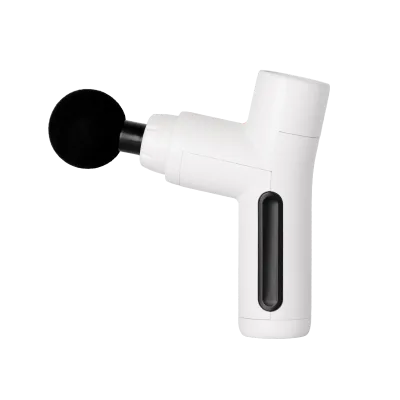


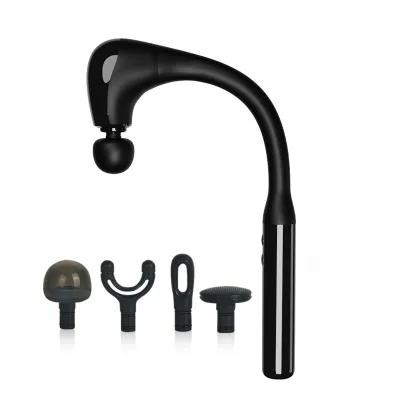
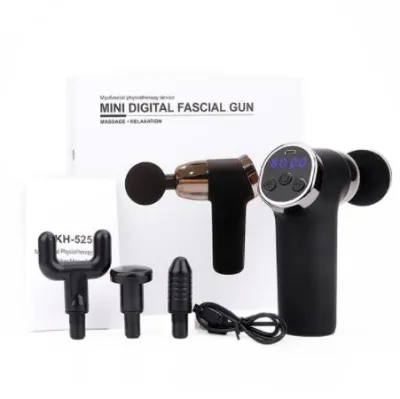
Comprehensive Sourcing Guide
Strategic Sourcing Guide for Deep Tissue Percussive Massager Guns
Procuring deep tissue percussive massager guns requires a rigorous approach that balances technical performance with supply chain reliability. The market for these devices is characterized by a wide variance in motor technology, battery capacity, and build quality. Buyers must navigate a landscape where specifications such as motor type, charging duration, and working time vary significantly between models. This guide outlines the critical factors for sourcing these devices, focusing on the observable attributes of the current market inventory, including specific model numbers, material compositions, and power specifications.
Technical Specifications and Motor Architecture
The core functionality of a percussive massager gun relies heavily on its motor architecture. In the current product pool, two distinct motor types are observed: Brushless Motors and Brush Motors. The presence of a Brushless Motor, as seen in models like ZM-112 and ZM-113, generally indicates a design intended for higher efficiency, reduced noise, and longer operational life compared to traditional Brush Motors found in other units. When evaluating a supplier, it is essential to verify which motor technology is employed, as this directly impacts the device's ability to deliver consistent deep tissue therapy without overheating.
Battery performance is another critical technical specification. The observed inventory shows a divergence in charging and working times. Some models, such as the ZM-112, list a charging time of 4 hours with a working time of 4 to 8 hours. In contrast, other variants like the ZM-113 indicate a 5-hour charging cycle with a 6 to 10-hour working window. Conversely, models like the ZM-108 specify a faster 3-hour charging time but a shorter 4 to 6-hour working duration. The power supply is consistently noted as rechargeable, with a specific charging type of 5V/2A observed in several entries. Buyers must ensure that the claimed working time aligns with their intended usage patterns, as a device with a 4-hour charge time but only 4 hours of operation may not suffice for extended professional use.
Material Composition and Physical Dimensions
The durability and portability of the massager are dictated by its material composition and physical footprint. The primary materials identified in the market data are ABS and general Plastic. ABS is often preferred for its impact resistance and structural integrity, which is vital for a device subjected to repeated percussive forces. The product packing varies, with some units shipped in a Carry Case with Color Box, while others utilize standard Cartons or Plastic Boxes. This variation in packaging can influence the perceived value and the level of protection during transit.
Physical dimensions are highly variable across the product range. The ZM-112 and ZM-113 share identical standard dimensions of 229247105 mm, suggesting a consistent form factor for that specific product line. However, the ZM-116 model presents a significantly different profile at 29263271 mm, indicating a potentially different internal layout or intended grip style. Other models, such as the ZN-0025, are described in imperial units as 17.48 x 5.43 x 3.9 inches with a weight of 2.5 pounds, while the ZN-0017 is listed at 7.09 x 6.5 x 2.36 x 2.36 inches and 2.2 pounds. The HS-MC-003 model measures 17570235mm. When sourcing, buyers must cross-reference these dimensions with their logistics requirements and the ergonomic needs of the end-user. A device that is too heavy or bulky may not be suitable for travel or home use, whereas a compact unit might lack the power required for deep tissue work.
Compliance, Certification, and Safety Standards
Navigating the regulatory landscape is a fundamental step in B2B procurement. The market data explicitly lists CE certification for at least one product line, specifically associated with the ZN-0017 model. The CE mark indicates conformity with health, safety, and environmental protection standards for products sold within the European Economic Area. However, the presence of this certification in the data should be treated as an observation of a specific listing rather than a universal guarantee for all deep tissue massagers in the category.
Buyers must verify that the specific supplier and model they intend to purchase carry the necessary certifications for their target market. While the data mentions CE, it does not provide information regarding other critical standards such as UL, FCC, or RoHS. Relying solely on the presence of a CE mark in a general product listing is insufficient for compliance. Procurement teams should request specific test reports and certification documents for the exact model number being sourced. Furthermore, the origin of the products is noted as Shenzhen, China, or generally China. While this is a major manufacturing hub, it necessitates a thorough due diligence process to ensure that the manufacturing facility adheres to international quality and safety protocols.
Cost Drivers and Pricing Dynamics
The pricing structure for deep tissue percussive massager guns is influenced by several factors, including motor type, battery capacity, and material quality. The observed price range in the market spans from 4.2 USD to 39.8 USD. This wide disparity suggests that the lower end of the spectrum likely corresponds to units with Brush Motors, shorter battery life, or simpler plastic construction, while the higher end may reflect Brushless Motor technology, extended working times, and premium packaging.
The Minimum Order Quantity (MOQ) also plays a significant role in cost management. The observed MOQ range is broad, extending from 1 unit to 1000 units. This flexibility allows buyers to test the market with small orders or commit to larger volumes for better unit economics. However, the "Price: Low" attribute observed in some listings should be interpreted with caution. A low price point may correlate with reduced quality, shorter warranty periods, or limited customization options. Buyers should analyze the total cost of ownership, including potential maintenance costs associated with Brush Motors versus the higher upfront cost of Brushless Motor units.
Typical Applications and User Demographics
Understanding the intended application of the device is crucial for matching the right product to the right market segment. The product attributes indicate that these massagers are designed for the "Adult" age group and are suitable for "Whole Body" exercise and relaxation. The specific massage points identified include the "Shoulder," highlighting their utility for targeted muscle relief. The appliances are categorized for use in "Home, Gymnasium, Park, and Community" settings, suggesting a versatile design that can withstand both domestic and semi-professional environments.
The gender classification is listed as "Unisex," indicating that the design is intended to be inclusive and adaptable to various user preferences. The "Folded" attribute is noted as "Unfolded" in the data, which may imply that the device is a fixed form factor rather than a collapsible one, or it could refer to the state of the attachments. Buyers should clarify the physical configuration of the device to ensure it meets the portability requirements of their customers. For instance, a device intended for gymnasium use might prioritize power and durability, while a home-use model might emphasize quiet operation and aesthetic design.
Supplier Evaluation and Quality Control
Evaluating suppliers requires a focus on their ability to deliver consistent quality and adhere to the specifications provided. The data shows a variety of models, including ZM-112, ZM-113, ZM-116, ZM-108, FY-RX01, ZN-0025, ZN-0017, and HS-MC-003. Each model has distinct specifications regarding dimensions, materials, and power. A robust supplier evaluation process should involve verifying that the supplier can consistently produce the specific attributes observed in the product data.
Quality control measures should be established to ensure that the "High" quality attribute claimed in the market data is met in every batch. This includes testing the motor performance, verifying the battery charging and working times, and inspecting the material integrity of the ABS or Plastic casing. The "Customization: Available" attribute suggests that suppliers may offer options for branding or specific feature modifications. Buyers should confirm the extent of these customization options and the associated lead times. Additionally, the "Color" options observed, such as Black, Blue, Silver, and Pink, should be verified against the supplier's inventory capabilities to ensure that the desired colorways are available for the order volume.
Long-Term Procurement Considerations
Sourcing deep tissue percussive massager guns is not merely a transactional event but a strategic partnership that requires long-term planning. The variability in charging times and working durations across different models necessitates a clear understanding of the product lifecycle. Buyers should consider the availability of spare parts, particularly for the motor and battery components, to ensure that the devices remain functional over time. The "Rechargeable" nature of the power supply means that battery degradation will be a factor, and suppliers should be able to support warranty claims or replacement programs.
Furthermore, the origin of the products, specifically Shenzhen, China, implies a specific supply chain dynamic. Buyers should be aware of potential logistical challenges, such as shipping lead times and customs regulations, which can affect the availability of stock. The "Low" price and "High" quality attributes observed in the data should be balanced against the risk of supply chain disruptions. Establishing a relationship with a supplier who can provide consistent lead times and maintain quality standards is essential for long-term success. Finally, buyers should monitor the market for emerging standards and certifications to ensure that their product offerings remain compliant and competitive in the evolving landscape of health and wellness equipment.
Comparative Analysis of Key Product Attributes
To facilitate decision-making, the following table summarizes the key technical and physical attributes observed across the different models in the current market data. This comparison highlights the diversity in specifications that buyers must navigate.
| Product Model | Motor Type | Charging Time | Working Time | Material | Dimensions (mm) | Packaging | Origin |
|---|---|---|---|---|---|---|---|
| ZM-112 | Brushless Motor | 4 Hours | 4 - 8 Hours | ABS | 229247105 | Carry Case with Color Box | Shenzhen, China |
| ZM-113 | Brushless Motor | 5 Hours | 6 - 10 Hours | ABS | 229247105 | Not Specified | Shenzhen, China |
| ZM-116 | Not Specified | Not Specified | Not Specified | Not Specified | 29263271 | Not Specified | Not Specified |
| ZM-108 | Brush Motor | 3 Hours | 4 - 6 Hours | Plastic | 27225863 | Not Specified | Not Specified |
| FY-RX01 | Not Specified | Not Specified | Not Specified | Not Specified | Not Specified | Not Specified | China |
| ZN-0025 | Not Specified | Not Specified | Not Specified | Not Specified | 17.48 x 5.43 x 3.9 in | Carton | Not Specified |
| ZN-0017 | Not Specified | Not Specified | Not Specified | Not Specified | 7.09 x 6.5 x 2.36 in | Not Specified | Not Specified |
| HS-MC-003 | Not Specified | Not Specified | Not Specified | Not Specified | 17570235 | Plastic Box | Not Specified |
This table underscores the importance of selecting a model that aligns with specific operational needs. For instance, if extended working time is a priority, the ZM-113 offers a 6 to 10-hour window, whereas the ZM-108 offers a shorter 4 to 6-hour window but with a faster 3-hour charge. The choice between Brushless and Brush motors will also influence the long-term maintenance and noise levels of the device. By carefully analyzing these attributes, buyers can make informed decisions that optimize both performance and cost efficiency.
FAQs
What motor types are available for deep tissue percussive massager guns?
The market offers both Brushless and Brush motors for these devices. Brushless motors, found in models like ZM-112, provide higher efficiency and longer life, while Brush motors are present in other variants like ZM-108.
How long does it take to charge a rechargeable massager gun?
Charging times vary significantly between models, ranging from 3 to 5 hours. Specific units like the ZM-108 charge in 3 hours, whereas the ZM-113 requires 5 hours to reach full capacity.
Which materials are used to construct these percussive massager devices?
Primary materials include ABS and general plastic for durability and impact resistance. The ZM-112 and ZM-113 models specifically utilize ABS, while other units may rely on standard plastic constructions.
Can I find deep tissue massagers with CE certification?
Yes, CE certification is available for specific models such as the ZN-0017. Buyers should verify this certification for their exact target model rather than assuming it applies to the entire product range.
What is the working time duration for these electric massager guns?
Working times range from 4 to 10 hours depending on the specific model and battery capacity. For instance, the ZM-112 offers 4 to 8 hours, while the ZM-113 provides up to 10 hours of operation.
How do I identify the origin of these massager gun products?
Most products originate from Shenzhen, China, or are generally listed as coming from China. This location is a major manufacturing hub, but specific factory details should be confirmed during the sourcing process.
What customization options are available for bulk orders of massagers?
Customization is available for many of these products, allowing for branding or feature modifications. Buyers should confirm the extent of these options and associated lead times with the supplier before placing an order.